 Hyperlambda
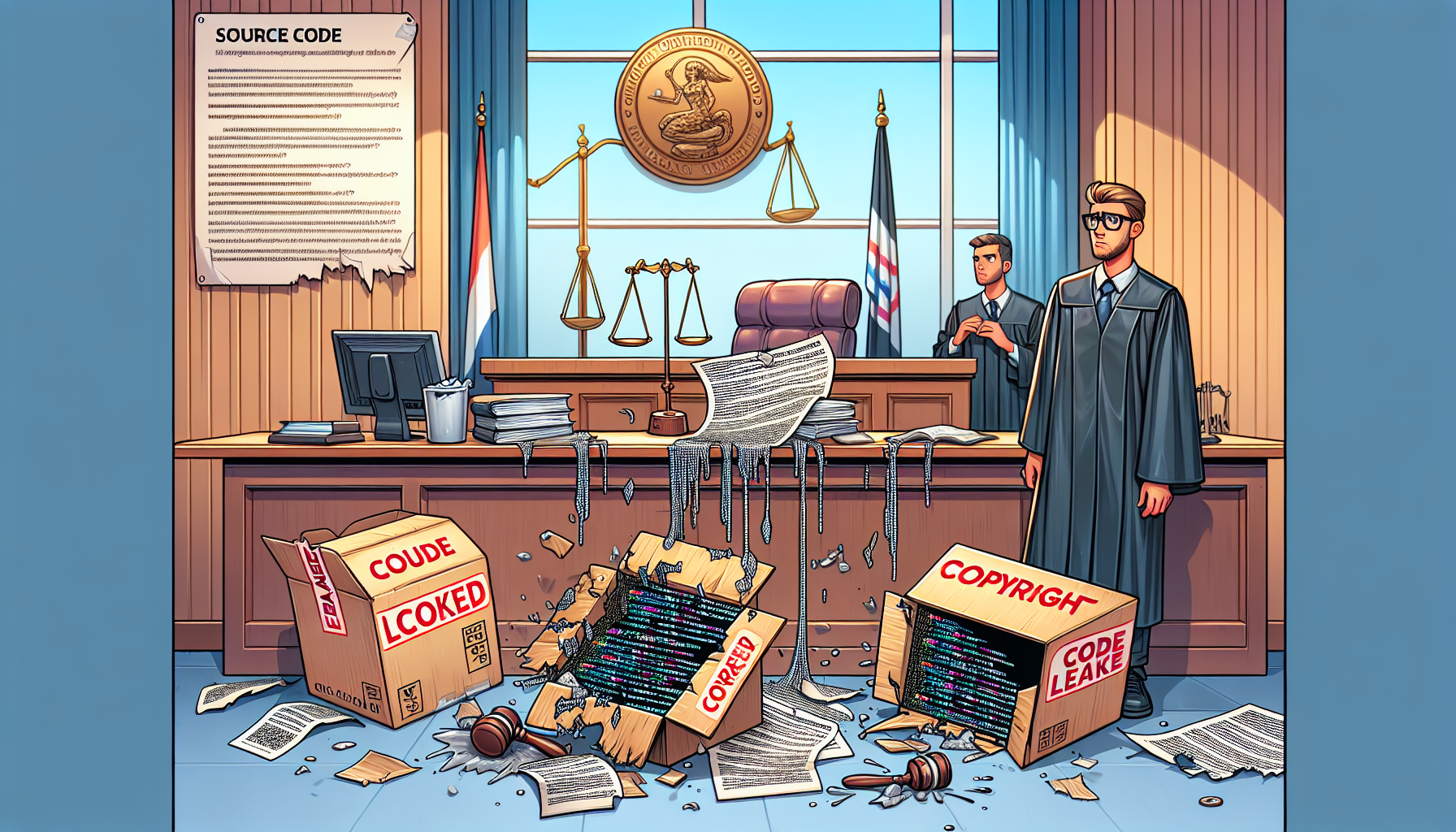
The most interesting thing about the Claude Code source leak is not that it happened.
Leaks happen. Build pipelines fail. Engineers make mistakes. Artifacts get published that were never meant to leave the building.
What makes this case unusually interesting is what it appears to reveal.
First, this was not a hack in the classic sense. Nobody seems to have needed to break through Anthropic's perimeter, chain together an exploit, or defeat some sophisticated access control layer. By Anthropic's own account, the source was exposed because of a packaging mistake. In plain English, they shipped the wrong thing.
Second, the leaked code appears to be good. Not perfect. Not simple. Not obviously beyond criticism. But good. Security-conscious, operationally mature, and clearly written by people who understand that letting an AI coding agent edit files and execute actions in the real world is dangerous unless surrounded by careful controls.
Third, if Anthropic is to be taken at its word that Claude Code writes the code for Claude Code itself, then the leak opens a much stranger question than mere embarrassment.
What if some or much of the leaked code is not merely proprietary software that escaped by mistake, but software whose copyright status is legally unstable to begin with?
That is where this story stops being only about release engineering and starts becoming a story about authorship, ownership, and the blurry legal frontier around AI-generated software.
This was not a breach but a release failure
There is a tendency in technology journalism to flatten every security event into the same narrative. Something sensitive became public, therefore it must have been hacked. But that framing matters, and in this case it appears to be wrong.
If the reports are accurate, Claude Code's internals became available because a source map or packaging artifact made its way into a public npm release. That is not an attacker defeating the system from the outside. That is the organization failing to control what its own software delivery pipeline published.
This distinction is not cosmetic. It changes the lesson completely.
A breach suggests your defenses were penetrated. A release engineering failure suggests your publishing process itself is part of the attack surface.
That is the more important story here.
Modern software companies often talk about security as if it lives in the runtime. Permissions. Authentication. Sandboxing. Guardrails. Audit logs. Prompt injection defenses. All of that matters.
But none of it helps much if your build and packaging process accidentally hands the world your product's internals.
Security does not end at execution. It extends all the way through artifact generation, packaging, CI, release, and distribution.
Anthropic does not appear to have been beaten by a clever adversary here. It appears to have been beaten by the oldest problem in software engineering.
A human being made a mistake.
The leaked code appears stronger than many expected
The irony is that the leak does not seem to reveal a sloppy toy system. It seems to reveal a team that took file safety, permissioning, and operational correctness seriously.
Based on the available analysis, Claude Code's file-editing pipeline appears to be built with multiple layers of defensive control. Writes are not treated casually. They are routed through dedicated mechanisms, checked against permissions, validated against prior reads, and written back to disk using safer patterns such as atomic replacement.
That is not amateur code. That is code written by people who understand that an AI system editing files is effectively a privileged agent operating close to the heart of a user's machine and workflow. That is the same problem anyone building on AI agents eventually runs into: the controls have to live somewhere the model cannot argue with, not in the prompt.
The strongest conclusion from the external assessment is not that the code is weak. It is that the code is strong, but complex.
That is an important distinction.
The reviewed design appears to include:
- defense in depth around file operations
- separation of overwrite, targeted edit, notebook edit, and shell-based editing flows
- stale-read detection
- diff previews before risky changes
- path and permission checks
- careful commentary around security-sensitive logic
- atomic write patterns instead of naive file replacement
In other words, this looks much closer to serious production infrastructure than to a hacked-together AI wrapper around shell commands.
That makes the leak more revealing. Because it suggests Anthropic's main failure was not in understanding application-layer security. Their main failure was allowing a mature internal codebase to be exposed by the release layer around it.
The product may have been hardened. The pipeline apparently was not hardened enough.
Complexity was both the achievement and the risk
There is also a deeper lesson in the code quality assessment itself.
The code appears good, but not simple. And in security work, those are not the same thing.
Some of the strongest commentary about the leaked internals points to exactly this tension. The system appears layered, defensive, and shaped by real edge cases. But it also appears to rely on multiple modules, multiple sequencing assumptions, and multiple interacting controls.
That is often what mature security engineering looks like in the real world. Not elegance. Not tiny perfect cores. But accumulated hardening.
That style has strengths. It captures ugly realities. It anticipates abuse. It handles operational edge cases that a cleaner design might miss.
But it also has costs. It becomes harder to audit. Harder to reason about holistically. Harder to refactor safely. And more likely to conceal subtle issues at the edges.
That matters here because modern AI systems are increasingly built as stacks of orchestration, permissions, context management, tools, and fallback logic. They are not simple programs. They are operational ecosystems.
And operational ecosystems fail in operational ways. Sometimes that means guardrail bypasses. Sometimes prompt injection. Sometimes supply chain issues. And sometimes it means an engineer packages the wrong artifact and ships the source to the world.
The embarrassing part may not be what most people think
For Anthropic, the reputational damage is probably not that people saw ugly code. From what has been described publicly, the opposite may be true. The leaked code reportedly reflects strong engineering instincts and serious security awareness.
The embarrassing part is something else.
It is that a company building one of the most advanced AI coding tools in the world, a tool explicitly intended to generate and manipulate software, appears to have lost control of its own release process.
That is a much more uncomfortable kind of failure.
Because it suggests that even teams that understand the risks of code execution, privilege boundaries, write safety, and file integrity can still fail at the more mundane but equally critical discipline of release engineering.
And release engineering is security. Not adjacent to security. Not supportive of security. Security itself.
The copyright question is where this gets strange
If this were only a story about leaked proprietary source code, the legal framing would be straightforward. Anthropic's source code would still be Anthropic's source code. Accidental exposure would not magically turn it into permissively licensed software. A leak is not a license. Public access is not lawful reuse. That part is easy.
But Anthropic has publicly claimed that Claude Code writes all of their code, including the code for Claude Code itself.
If that is true, the legal terrain gets much stranger.
Because copyright law in many major jurisdictions still revolves around human authorship. That is especially true in the United States, where the current direction of travel is fairly clear: purely machine-generated output is on shaky ground as a copyrightable work unless there is meaningful human creative authorship layered on top.
The European position is different in wording but similar in spirit. Copyright generally attaches to an author's own intellectual creation, which again points back toward a human being. The United Kingdom has somewhat more unusual rules around computer-generated works, but even there, the application of those rules to modern generative AI remains unsettled.
So if a company publicly says that its coding model generated the code for the coding model, it may be making a branding statement, a workflow statement, or a productivity statement. But it may also be creating an authorship problem.
Who wrote the software? A human engineer? A human-directed editorial process? A machine operating with limited supervision? A machine producing drafts that humans reviewed?
Those distinctions are not philosophical trivia. They may determine whether the code is strongly copyrightable, partially copyrightable, or much harder to protect than conventional proprietary software.
Is leaked AI-generated code effectively open source?
Strictly speaking, no. Not automatically. Not in the formal legal sense.
Open source is not merely code people can access. It is code released under a license granting explicit rights to use, modify, redistribute, and fork. A leak provides visibility, not permission.
But there is a more provocative version of the question, and it is harder to dismiss.
If software is generated largely by AI, and if copyright in purely AI-generated output is legally weak or unavailable in major jurisdictions, then what exactly is the company asserting ownership over?
If there is not enough human authorship in the relevant portions of the code, the answer may be: less than they think.
That does not mean every leaked repository instantly becomes lawful to commercialize. Trade secret law, contract law, jurisdictional differences, evidentiary issues, and factual disputes about how the software was actually created all still matter. So do the human contributions that may exist in architecture, editing, arrangement, prompts, review, and revision.
But the uncomfortable possibility remains.
A codebase can be commercially guarded, operationally secret, and strategically important while also sitting on a weaker copyright foundation than traditional software if too much of its authorship was delegated to a machine.
That creates a bizarre outcome. The code may not be officially open source. Yet some of it may be closer in legal effect to public-domain-adjacent material than companies building with AI would like to admit.
That possibility alone should terrify every company loudly claiming that its models write all of its production code.
Because those statements sound impressive until ownership is tested.
The source leak may have exposed more than implementation details
The obvious consequence of a source leak is that competitors, researchers, and attackers get to study how the system works. That matters. They can inspect tool definitions, orchestration patterns, prompt scaffolding, file safety logic, permission boundaries, and architectural assumptions.
But in this case the leak may also expose a strategic contradiction in the AI industry.
Companies want to say their systems are powerful enough to replace significant amounts of human labor. They want to say the AI writes the code. Builds the product. Accelerates engineering. Possibly even creates the next generation of itself.
At the same time, those same companies want to retain the strongest possible proprietary claims over the output.
Those two ambitions do not always fit together cleanly.
The more autonomous the AI-authorship claim becomes, the more unstable the copyright claim may become too.
That is not a public relations problem. That is a legal one.
The real lesson is brutally simple
Claude Code does not appear to have leaked because Anthropic lacked smart engineers. If anything, the available evidence points in the other direction. The code seems to reflect people who understand permissions, file risk, write integrity, and adversarial edge cases better than most.
It leaked because strong internal engineering is not enough when the surrounding operational process fails.
And if Anthropic's own public statements about AI-generated authorship are accurate, then the leak may have surfaced an even deeper weakness. Not merely loss of secrecy, but uncertainty of ownership.
That is what makes this episode more than a routine tech embarrassment.
It is a case study in three separate truths colliding at once.
First, sophisticated products can still be undone by ordinary human mistakes. Second, release engineering is part of the security perimeter whether companies treat it that way or not. Third, the more aggressively AI companies claim machine authorship over their own software, the more they may be undermining the legal foundations of their proprietary control.
That is why this was not just a leak. And not just a packaging error. And not just a copyright curiosity.
It was a glimpse into what happens when modern software complexity, AI-generated production code, and old copyright doctrine all meet the real world at the exact same time.
If the reports are accurate, Anthropic did not need to be hacked to lose control of Claude Code's internals. It only needed one engineer to ship the wrong artifact.
And if Claude really wrote the code, the harder question may be whether Anthropic fully owned it in the first place.