 Hyperlambda
AI Agents on Your Own Database, MCP Servers, 100% Open Source
Step-by-step tutorials, feature matrices against Supabase, Firebase, n8n and Lovable, and the measured receipts behind every claim.
Magic vs WordPress: An Honest Feature Matrix
WordPress turns 23 next year and runs 41% of the web on a PHP hook system with no permission boundary. Magic generates files an AI agent can read, write and run inside a sandbox. The matrix, the Elementor div-soup problem, and the pricing.
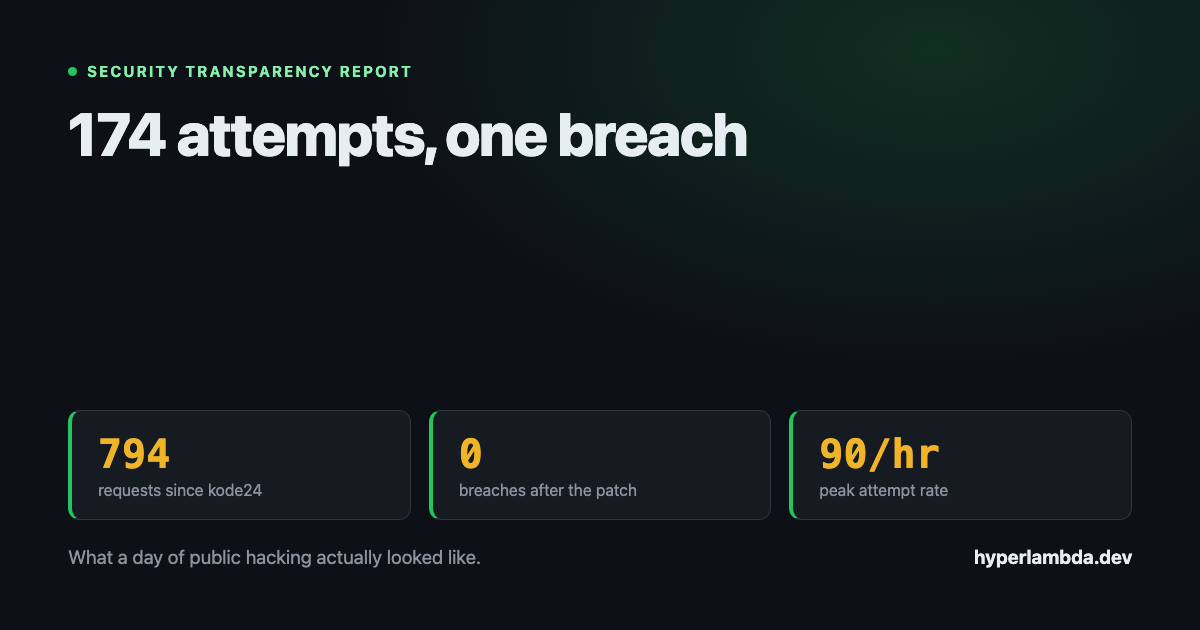
174 Attempts, One Breach: What Happened After We Published Our Own Vulnerability
A day after we published our own sandbox breach, traffic to the endpoint went from single digits a day to 90 an hour. Here is the full before/after data, the second bounty it produced, the fix that closed it the same day, and the prompt injection aimed at the AI reading the incident logs.
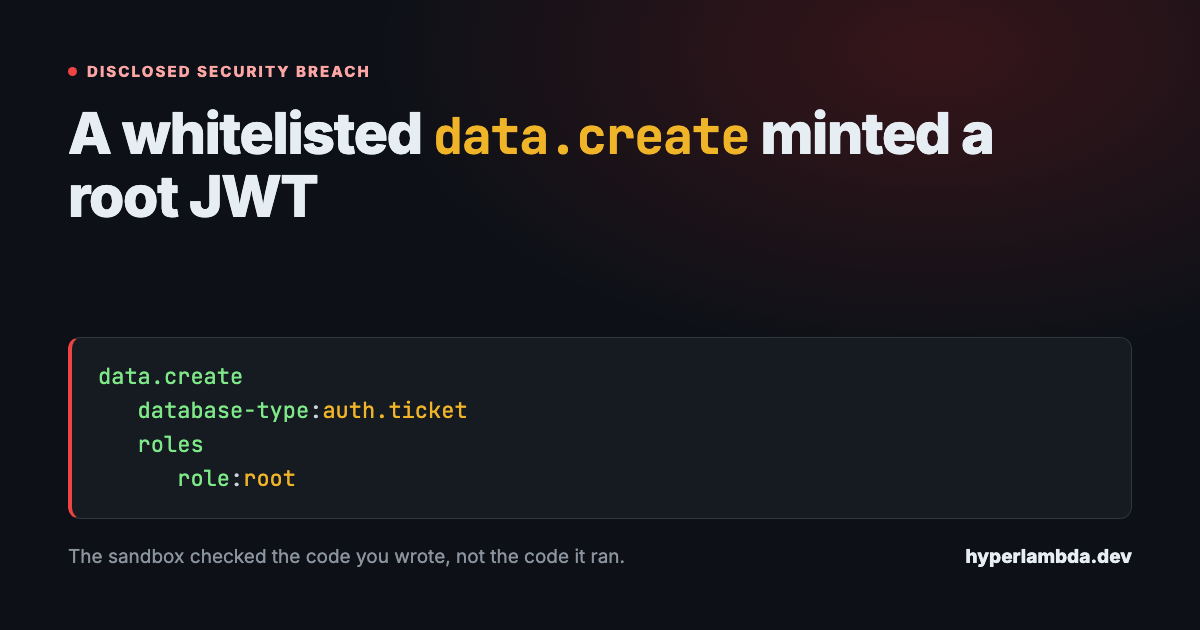
We Got Breached: A Whitelisted data.create Minted a Root JWT
I offered $100 to anyone who could break my sandbox and said nobody had done it. Someone did - with a Chinese model, because the Western ones refused. Zero customers were breached. Here is the payload, why it worked, and the one change that closes the class.
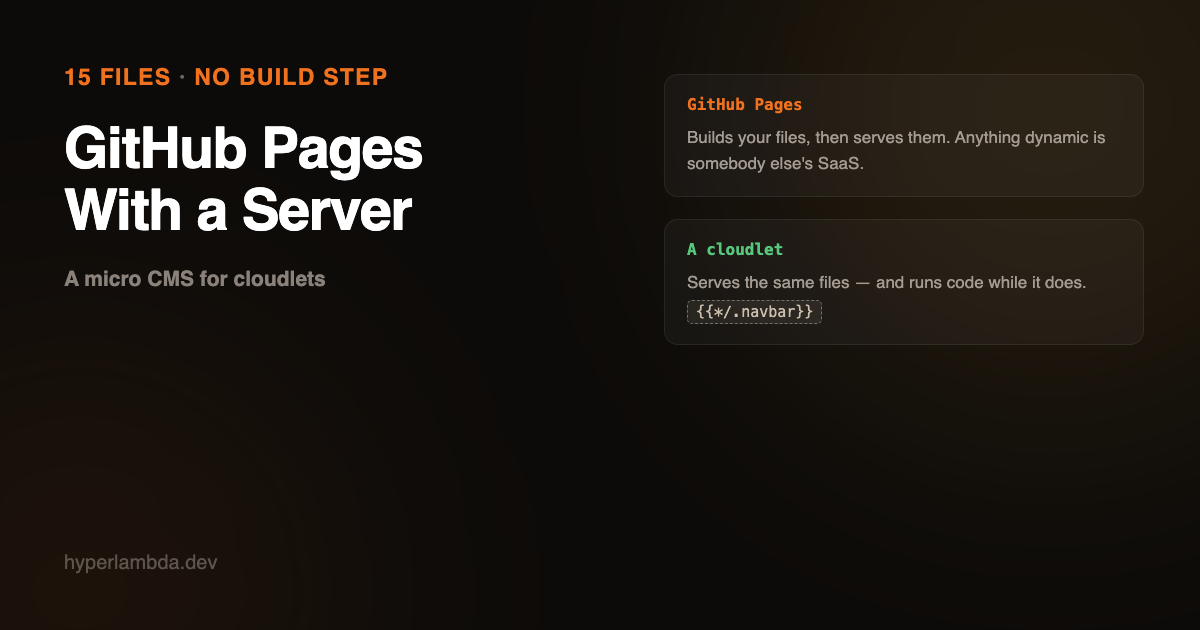
GitHub Pages With a Server: A 15-File Micro CMS for Cloudlets
A website template you install in one click: 15 files, no build step, server-side includes, and a blog that reads Markdown at request time. Not a WordPress alternative. A GitHub Pages alternative that can run code.
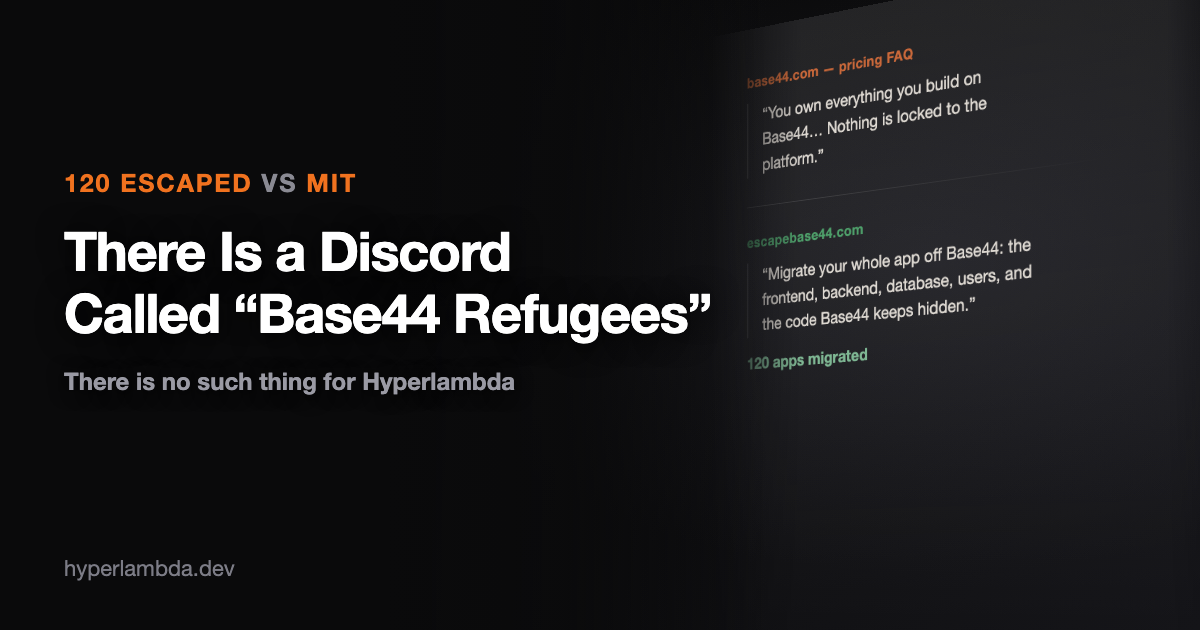
There Is a Discord Called “Base44 Refugees”. There Is No Such Thing for Hyperlambda.
Base44's FAQ says nothing is locked to the platform. A paid migration service has moved 120 apps off it. What the export button actually hands you, and what it keeps.
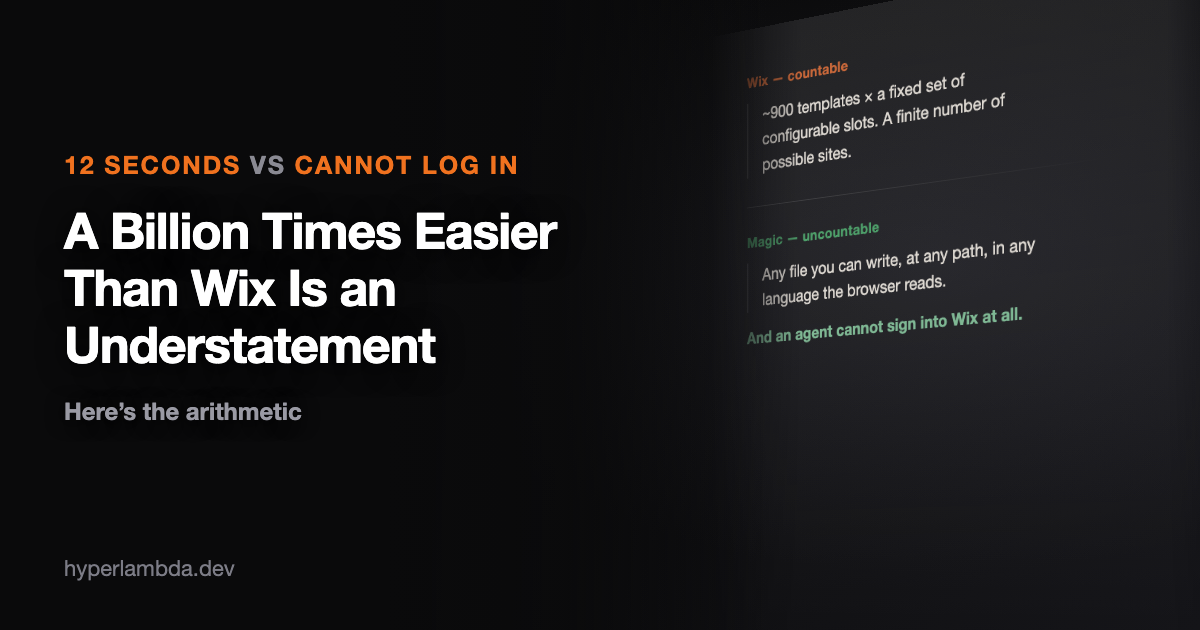
A Billion Times Easier Than Wix Is an Understatement: Here's the Arithmetic
Three minutes from prompt to a production website, twelve seconds of which was the platform. Wix can't be driven by an AI agent at all. The pricing, hosting and licence comparison, and the maths behind the claim.
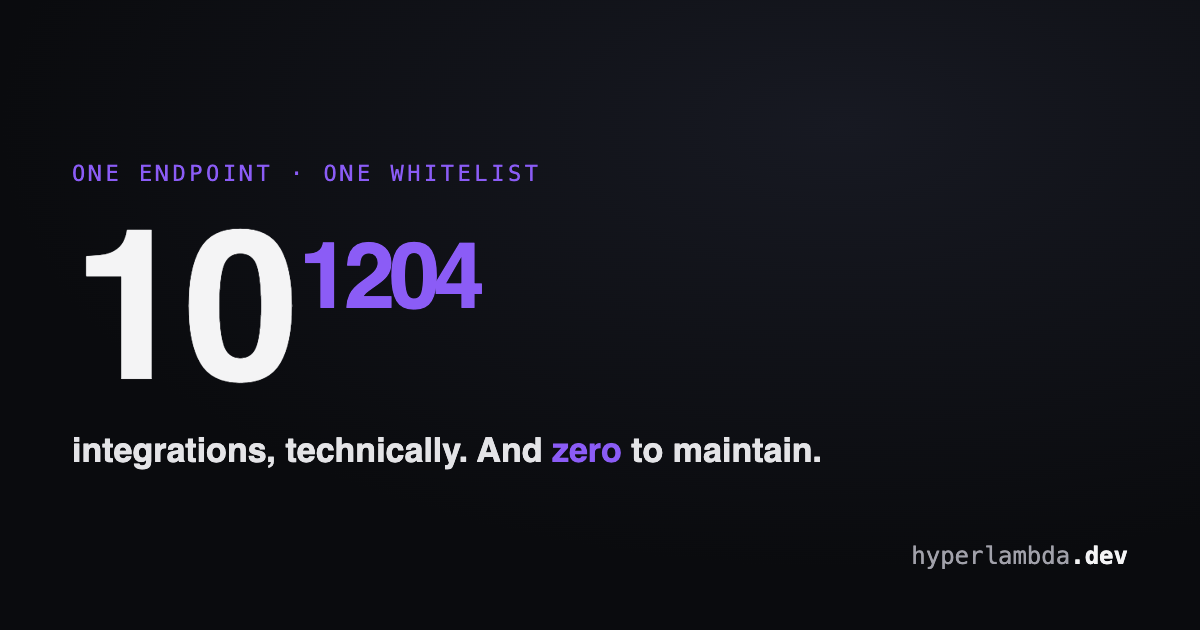
My MCP server technically has 10 to the power of 1204 number of integrations! Try it for free here!
One MCP endpoint that runs plain-English instructions inside a whitelist - a 500-character input space of 10^1204 possibilities, replacing every hand-built integration. Free guest login.
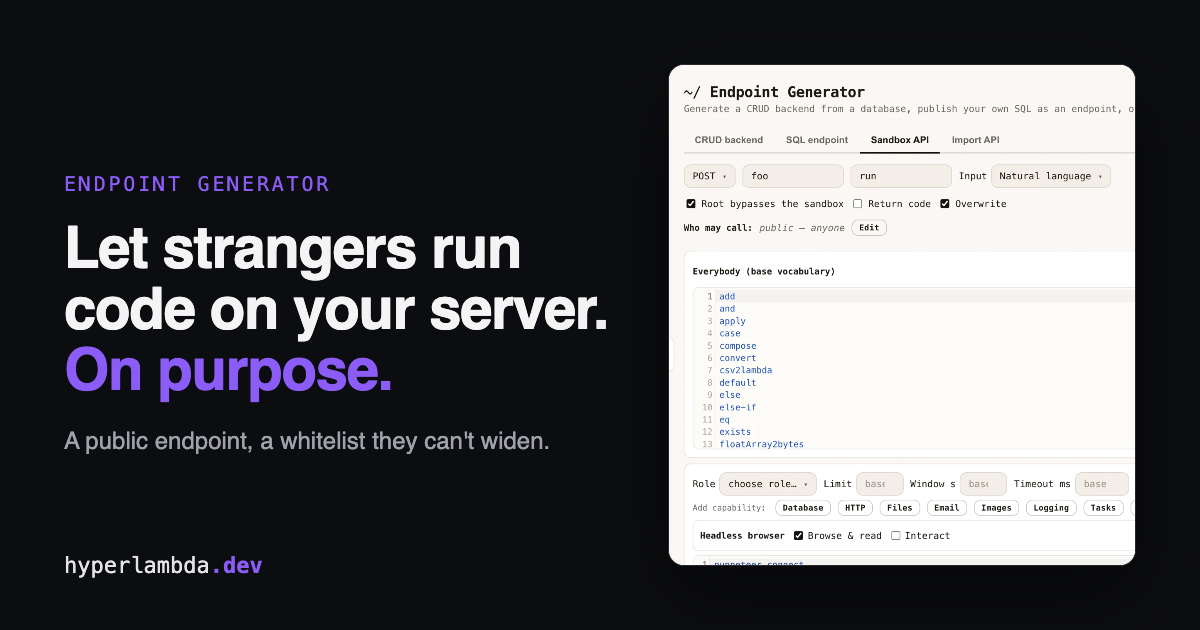
Let Strangers Run Code on Your Server. On Purpose.
A dashboard tab that generates one endpoint anyone can send code to - Hyperlambda or plain English - running inside a role-scoped whitelist callers cannot widen.
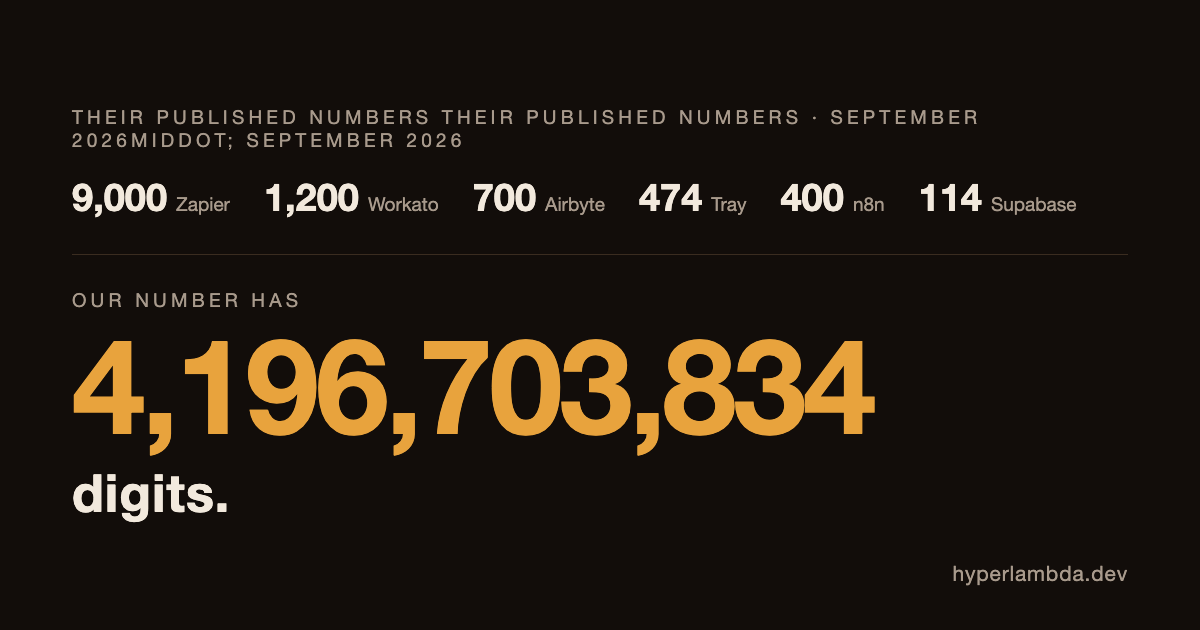
Our Integration Count Has 4,196,703,834 Digits
Zapier publishes 9,000 apps. Workato publishes 1,200 connectors and 1000+ apps on the same page. Airbyte publishes 700+ and 584 on the same screen. Supabase publishes 114 partners. Nobody is counting the same thing.

How Hyperlambda Saved the World from the Paperclip Apocalypse
A tutorial in AI safety, using rate limiters, proof-of-work CAPTCHA, execution timeouts and 71 lines of C#. The superintelligence is stopped on line 69.
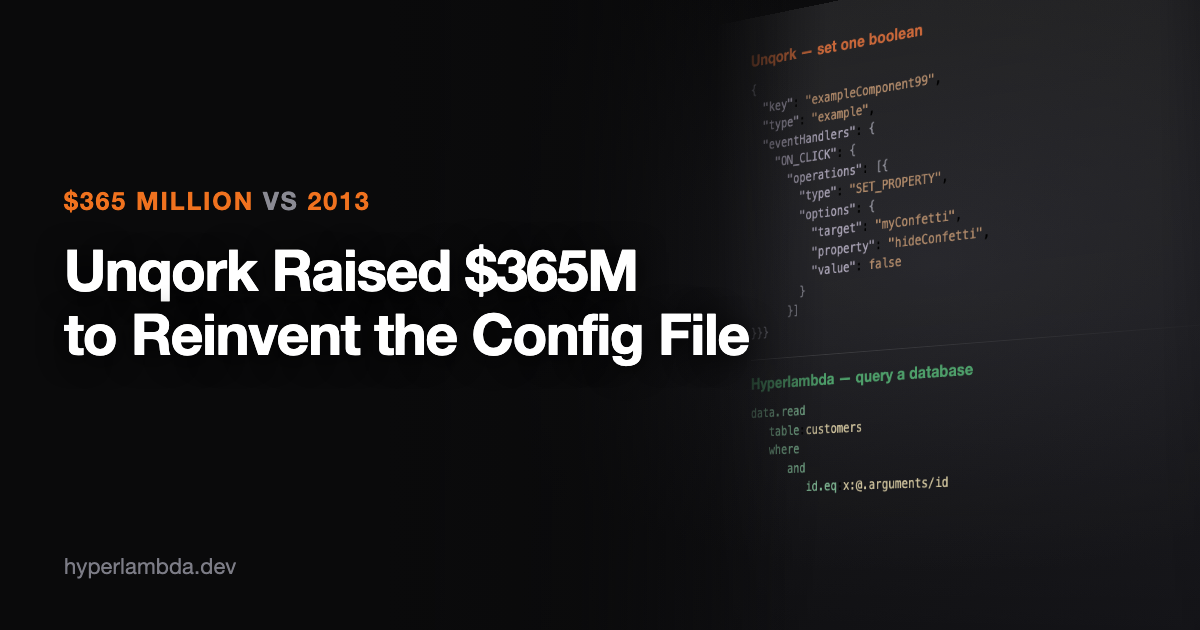
Unqork Raised $365 Million to Reinvent the Config File. Hyperlambda Got There in 2013.
Unqork's codeless applications are an abstract syntax tree serialised to JSON, running in your browser, on a runtime you cannot have. A teardown from their own documentation, repository and release notes.
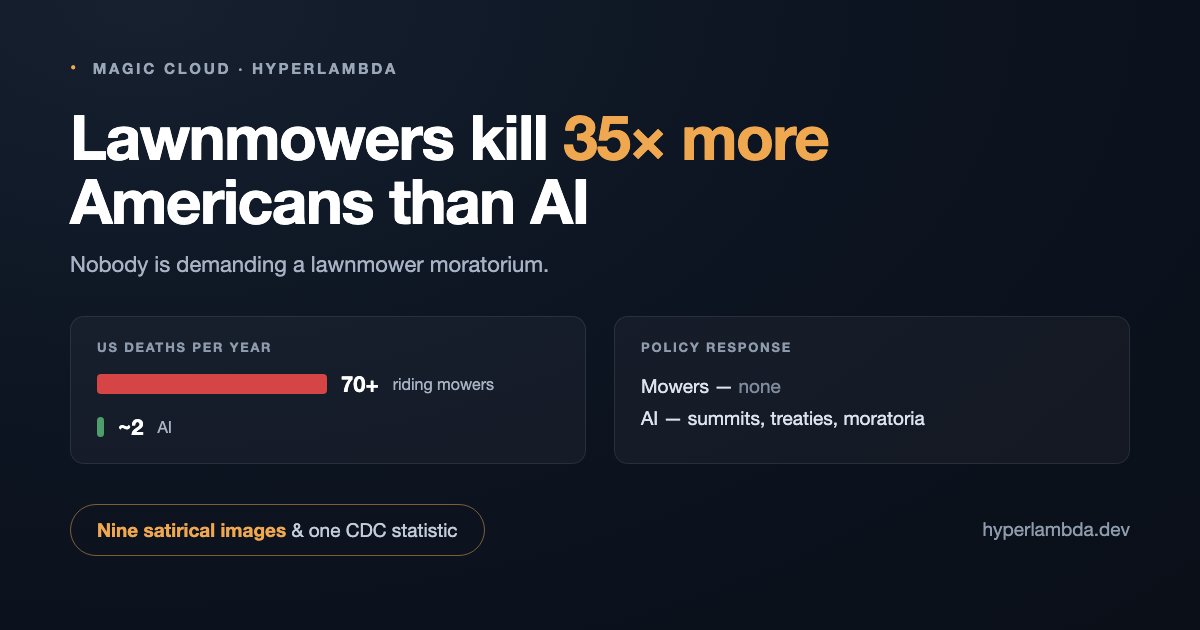
Riding Lawnmowers Kill 35× More Americans Than AI. Nobody Is Demanding a Lawnmower Moratorium.
Riding lawnmowers kill 70+ Americans a year. AI kills about two. One of those numbers has a UN summit attached to it. A satirical gallery, one CDC statistic, and a serious argument about where AI risk actually lives.