 Hyperlambda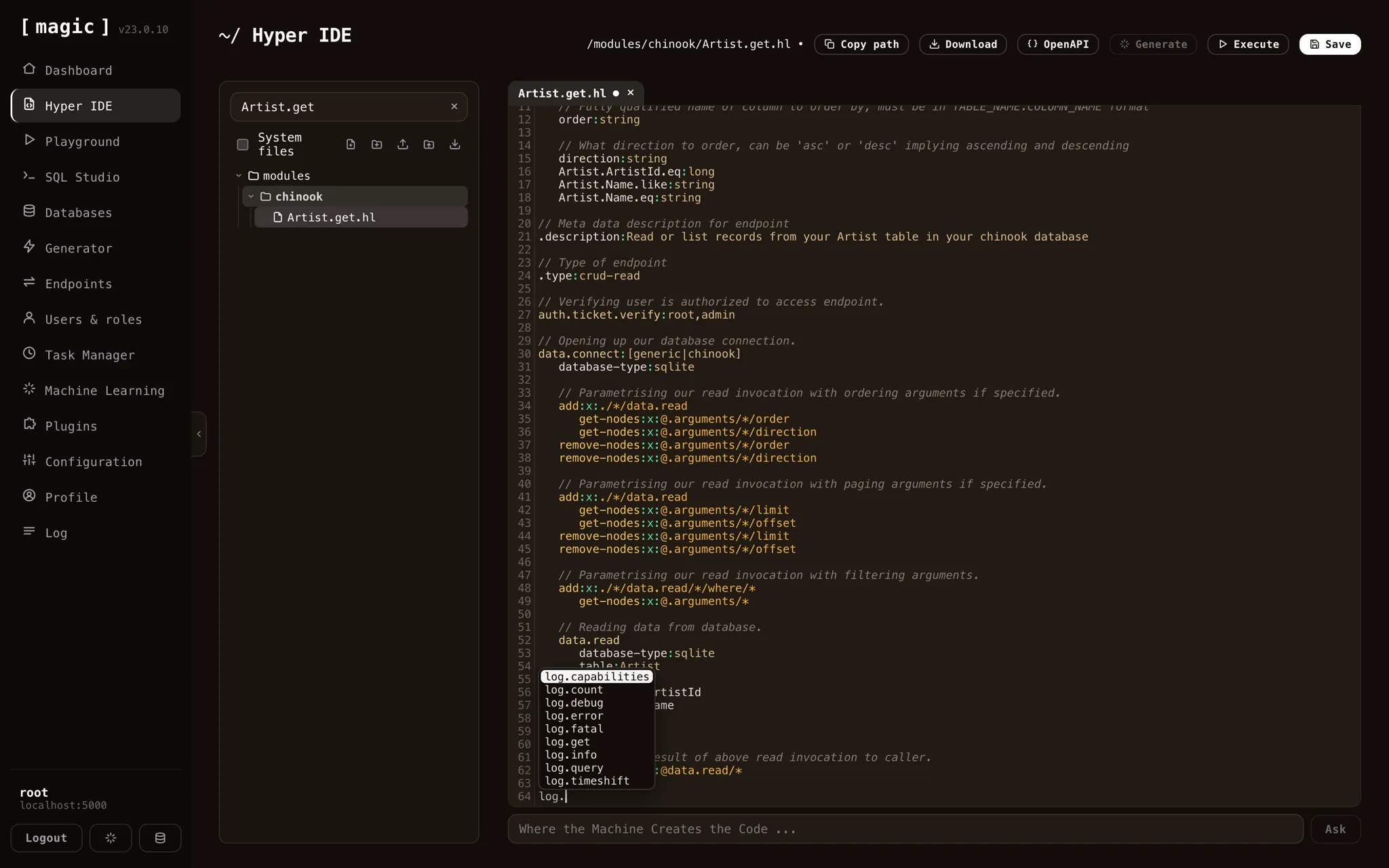
Deterministic Output
Hallucination-Resistant Execution
The model can propose structures, but only valid, whitelisted AST nodes can execute.
Describe what you want in English. Hyperlambda compiles it to a strict AST that executes only what the whitelist permits — secured APIs over your databases, frontends to match, complete in seconds for cents.
# When it's up: log in at http://localhost:5555 with root/root# Change that password before the internet does.$ curl -fsSL https://hyperlambda.dev/docker-compose.yaml | docker compose -f - upThe model can propose structures, but only valid, whitelisted AST nodes can execute.
Hyperlambda is not free-form generated source code. It is a constrained AST validated before execution.
Create AI agents that evolve over time with new tools, workflows, APIs, and backend capabilities generated on demand.
Run Magic Cloud locally, describe what you want in English, and Hyperlambda compiles it into strict ASTs for deterministic execution.
Write what you want in natural language
The compiler turns your request into Hyperlambda AST
Magic Cloud runs the result inside a constrained C# runtime
Hyperlambda runs in a sandbox that can restrict the execution layer at individual function level — which makes AI-generated code safe to execute by construction: a hallucinated capability fails before it runs.
“Create an endpoint that returns unpaid invoices for a customer.”
.argumentscustomer_id:longdata.connect:billingdata.readtable:invoiceswhereandcustomer_id.eq:x:@.arguments/*/customer_idstatus.eq:unpaidreturn-nodes:x:@data.read/*[{"id": 42,
"customer_id": 7,
"invoice_number": "INV-10042",
"amount": 1299.00,
"due_date": "2026-05-15",
"status": "unpaid"},
{"id": 57,
"customer_id": 7,
"invoice_number": "INV-10057",
"amount": 249.50,
"due_date": "2026-06-01",
"status": "unpaid"}]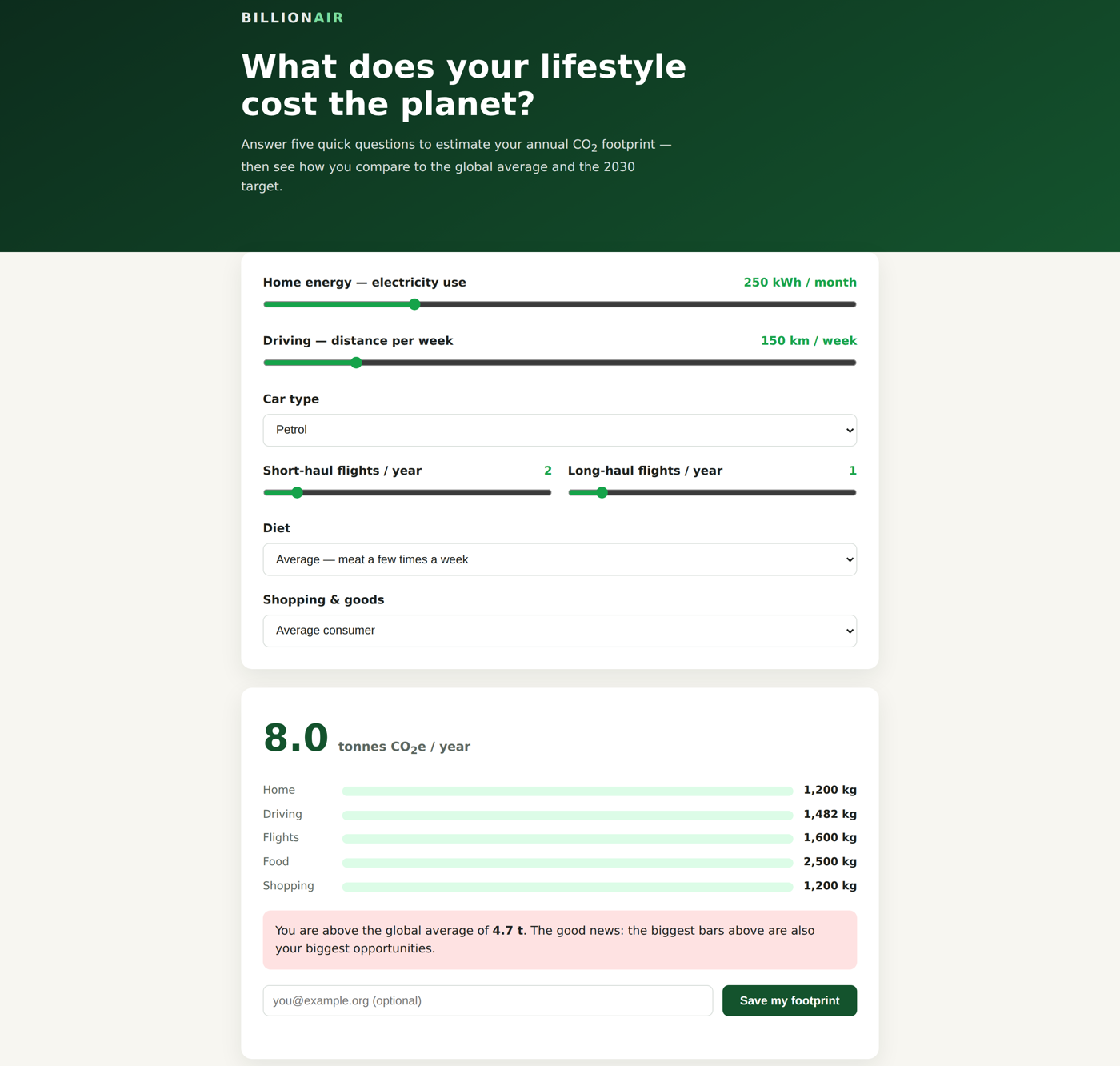
This carbon calculator is a complete application on a Magic cloudlet — SQLite database, public and role-gated API endpoints, and the frontend itself, all served from the same system. An AI agent built it autonomously during a live client meeting: database, endpoints, SPA — deployed and smoke-tested before the call ended.
Click the screenshot to open it full size.
Every Magic Cloud install ships with a dashboard for building and running your backend.
Click the animation to open it full size.
Take the full dashboard tour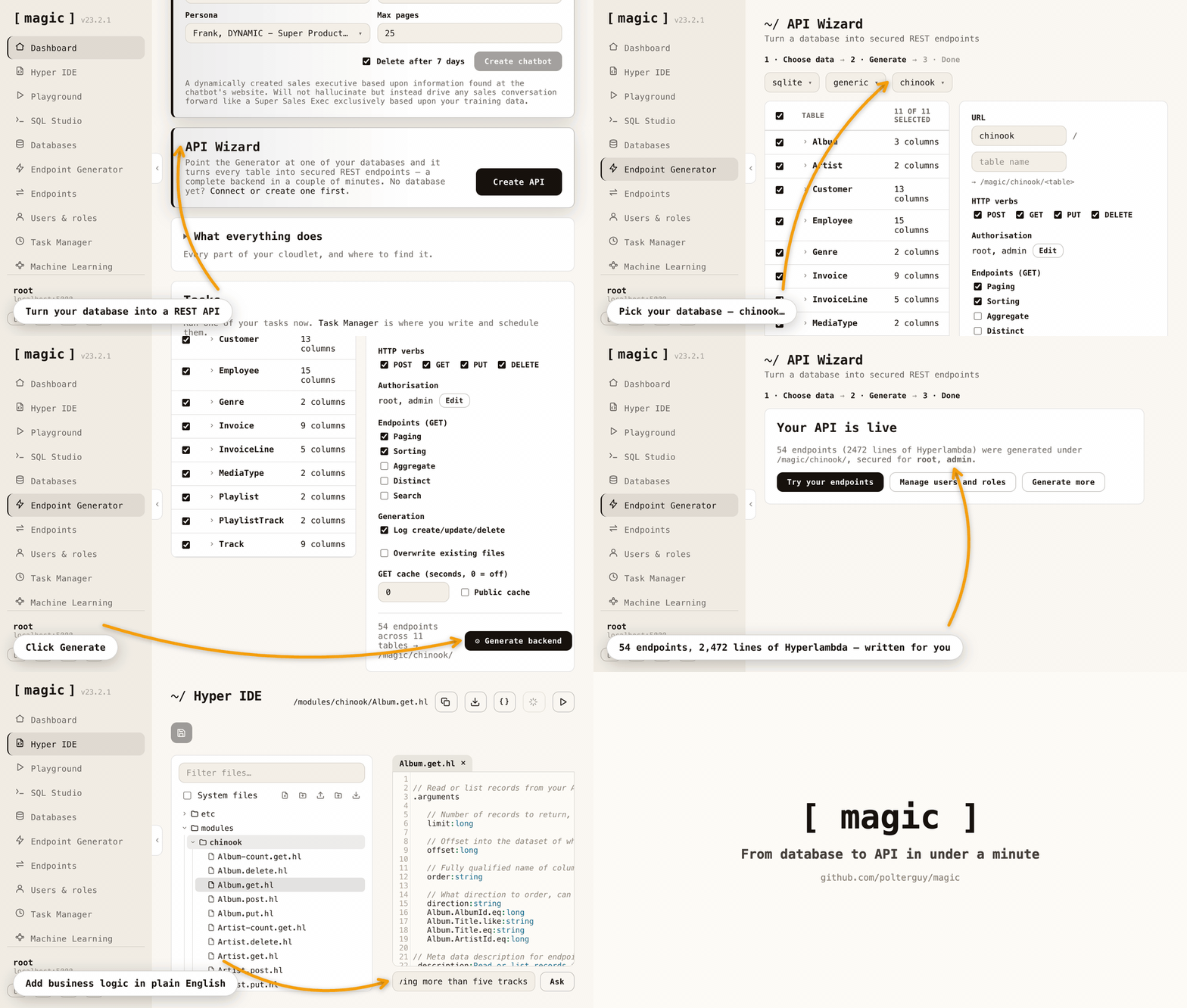
Feature matrices written the uncomfortable way — including the rows we lose.
In this video I demonstrate how to create and deploy into production a full stack app in 7 minutes, 100% on requirements, and exactly what the client wanted.
Everything in the video ships with every install — MIT-licensed, self-hosted, and running on your own machine minutes after the Docker command at the top of this page.
“Kudos for the incredible work: it's the first real IDE dedicated to AI.”
 Samuele ContardiSoftware Architect
“The truth is that I like Firebase, but your system is made much simpler.”
 Alex ErdeiFrontend Developer
“It's so amazing and revolutionary, yet easy to use and elegant.”
 Justin LietzSoftware Engineer
Hyperlambda is a programming language whose code is a tree structure rather than free-form text — effectively an executable AST. That structure is what lets natural-language requests compile into something deterministic and inspectable before it runs, which is why it suits AI-generated backends.
Complete full-stack applications — secured CRUD APIs over your databases, frontends and SPAs served from the same cloudlet, backend workflows, scheduled tasks, AI agents and tools, and embeddable chatbots trained on your own content. All generated from short natural-language prompts rather than hand-written.
Yes. A Magic cloudlet serves static sites and single-page applications alongside the APIs they consume, so a working prompt-to-app flow is: design the database, generate the secured endpoints, and deploy the frontend — one system, one deployment. Users, roles, and full OIDC and OAuth support are built into the platform, so the applications you ship come with real authentication rather than something bolted on per project.
No. You describe what you want in plain language and the generator compiles it to Hyperlambda for you. Knowing the language helps you read and adjust the result, but it is not required to build working backends.
The security boundary is the runtime, not the model. Generated Hyperlambda compiles to an AST whose nodes can only bind to explicitly whitelisted capabilities in the current context; anything outside that fails before it executes. The model proposes, the runtime decides.
Yes. The runtime's safety model is independent of which model generated the code. Magic integrates OpenAI, Ollama and HuggingFace for its own AI features, and with the MCP plugin installed your cloudlet exposes an MCP server that any MCP-capable harness — including Claude, Codex, Cursor and Qoder — can connect to, using your endpoints as tools.
SQLite is built in, and you can connect external MySQL, PostgreSQL and Microsoft SQL Server. Once connected, the platform treats an external database like a local one for querying, design and code generation.
Magic ships single sign-on out of the box for Google, GitHub, LinkedIn, Microsoft Entra ID, Okta, Auth0, Keycloak and Slack. Each provider is turned on from the dashboard with a client ID, external identities are scoped per provider and mapped onto Magic's own role-based access control, and a provider is a single Hyperlambda file — so adding another is dropping a file into a folder.
Short version: Supabase is a hosted-first BaaS where self-hosting is the second-class path; n8n is a workflow orchestrator, not a backend; PocketBase shares Magic’s MIT single-binary philosophy but bets on humans writing Go rather than agents generating code. We publish honest feature matrices for each — including the rows Magic loses: Supabase, n8n, PocketBase.
A single endpoint or tool typically generates in seconds. Because the output is validated structure rather than loose source code, what comes back is immediately runnable instead of needing a debug-and-fix loop.
Yes. Magic Cloud, which runs Hyperlambda, is MIT-licensed and open source on GitHub. You can run the whole platform on your own hardware with no license fee.
You can self-host it entirely. Magic Cloud runs on your own server — a single Docker command brings up the full stack — and nothing leaves your machine unless an integration you configure sends it somewhere.
Magic Cloud has run in production for years, and the whole platform is MIT-licensed with nothing held back — so the exit scenario is that you keep running the code you already have, fork it if you wish, and owe nobody anything. There is no license to renew, no hosted dependency to lose, and no vendor whose death takes your backend with it.

I wrote my first line of code at eight years old, and 44 years later I am still at it. Hyperlambda is the part I care most about — a language I created because I believe the answer to unsafe AI code generation is not better prompts, but a runtime that cannot be talked into doing the wrong thing.
Magic Cloud has been running in production for years, and every line of it is MIT-licensed and public. That is the deal: you can read everything, run everything on your own hardware, and the code stays yours no matter what happens to me. The bounty below is not marketing — I offer it because I know how the sandbox is built.
Escape the Hyperlambda execution sandbox from the playground — make generated code do something the whitelist forbids — and I will pay you $100. Nobody has.
# When it's up: log in at http://localhost:5555 with root/root$ curl -fsSL https://hyperlambda.dev/docker-compose.yaml | docker compose -f - upPrefer it hosted? AINIRO runs cloudlets — same code, nothing gated.