Own what you build · MIT everything · Bring your own agent

An Open Source Alternative to Lovable

Lovable is an AI frontend builder that rents you everything underneath it — the backend is Supabase, the hosting is theirs, the agent is captive, and the meter runs on credits. Magic Cloud inverts all four: a real backend that generates and runs your APIs, auth, and frontend on hardware you control, built by whichever AI agent you already use, at plain token cost, MIT-licensed down to the last file. This page is the honest comparison — including the rows where Lovable wins.

MIT, all of it — take your files and database and leave anytime, apps keep running
No deploy step — save the file and it is live, test it the same second
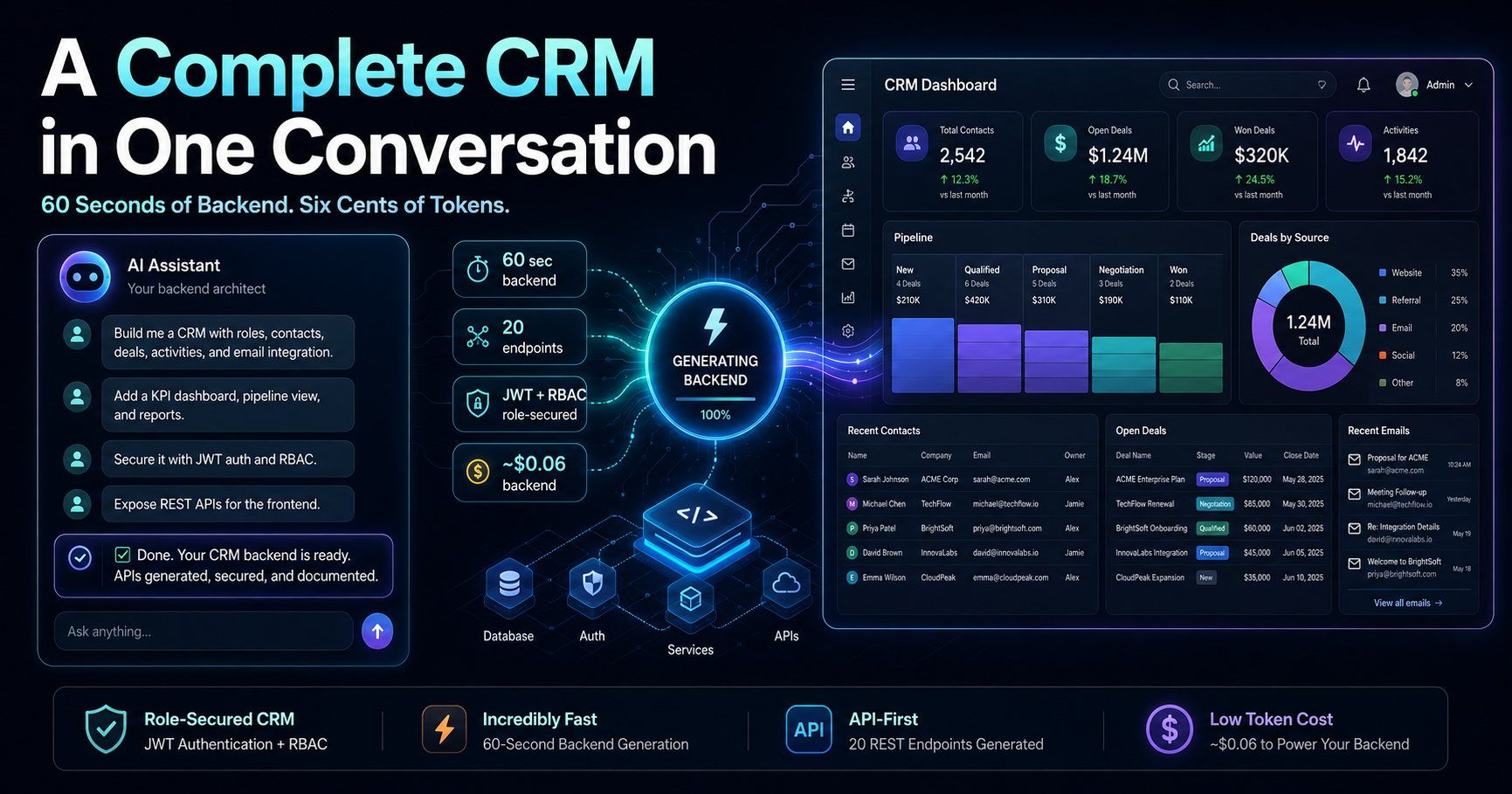
A complete CRM backend generated for six cents of tokens — receipts in the blog
Watch it work

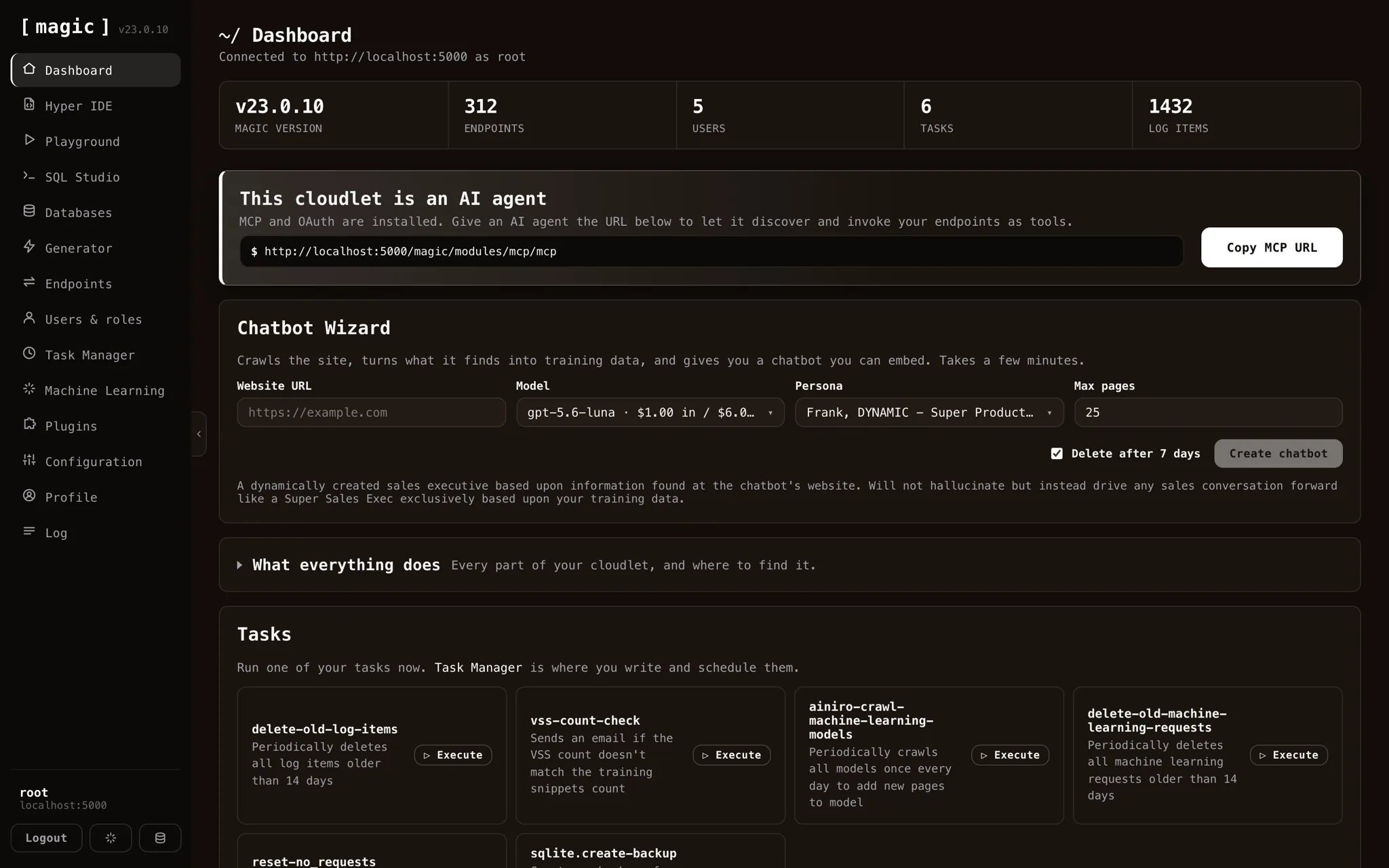
A database in, a secured API out — live

This is the API Wizard turning a database into a complete, role-secured REST backend, invoking one of the generated endpoints, and then extending it in plain English — no deploy step anywhere, because the code runs where it is written.

The API Wizard generating a complete secured REST API from the chinook database, invoking an endpoint, and extending it in plain English
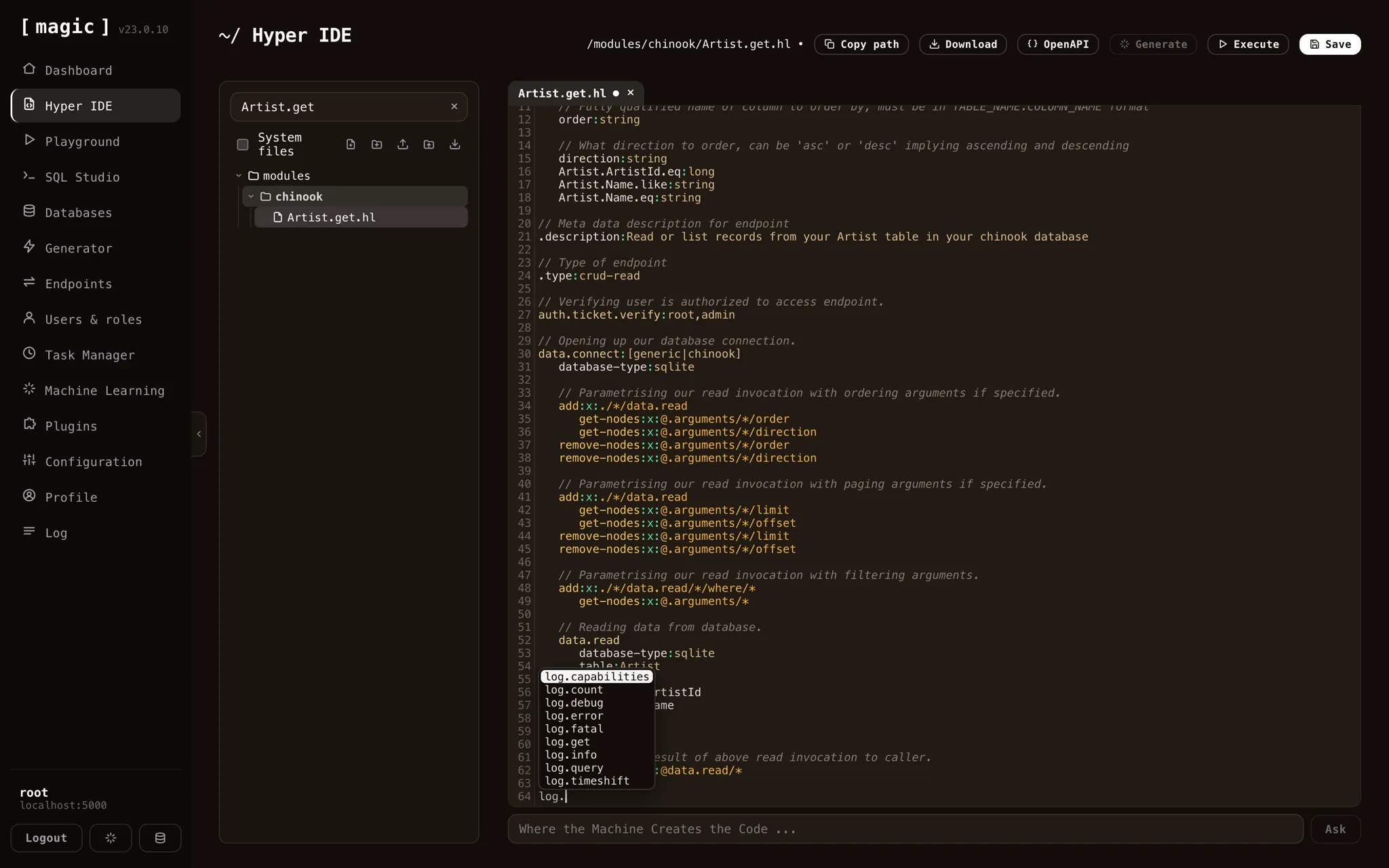
Hyper IDE editing a generated endpoint - real files on a server you control
Real files, not a walled garden

Code you can open, edit, and take with you

Everything the AI generates on a Magic cloudlet is a real file in a real file system — readable, editable in the built-in IDE, versioned with the built-in Git integration, and yours. There is no export button because there is nothing to export from: you are already holding it.

When a platform holds your app and you hold a subscription, the relationship is rental. When you hold the files and the platform is MIT-licensed, the relationship is ownership. That single difference decides most of this page.

The backend is included

Auth, roles, and databases — not a federation of services

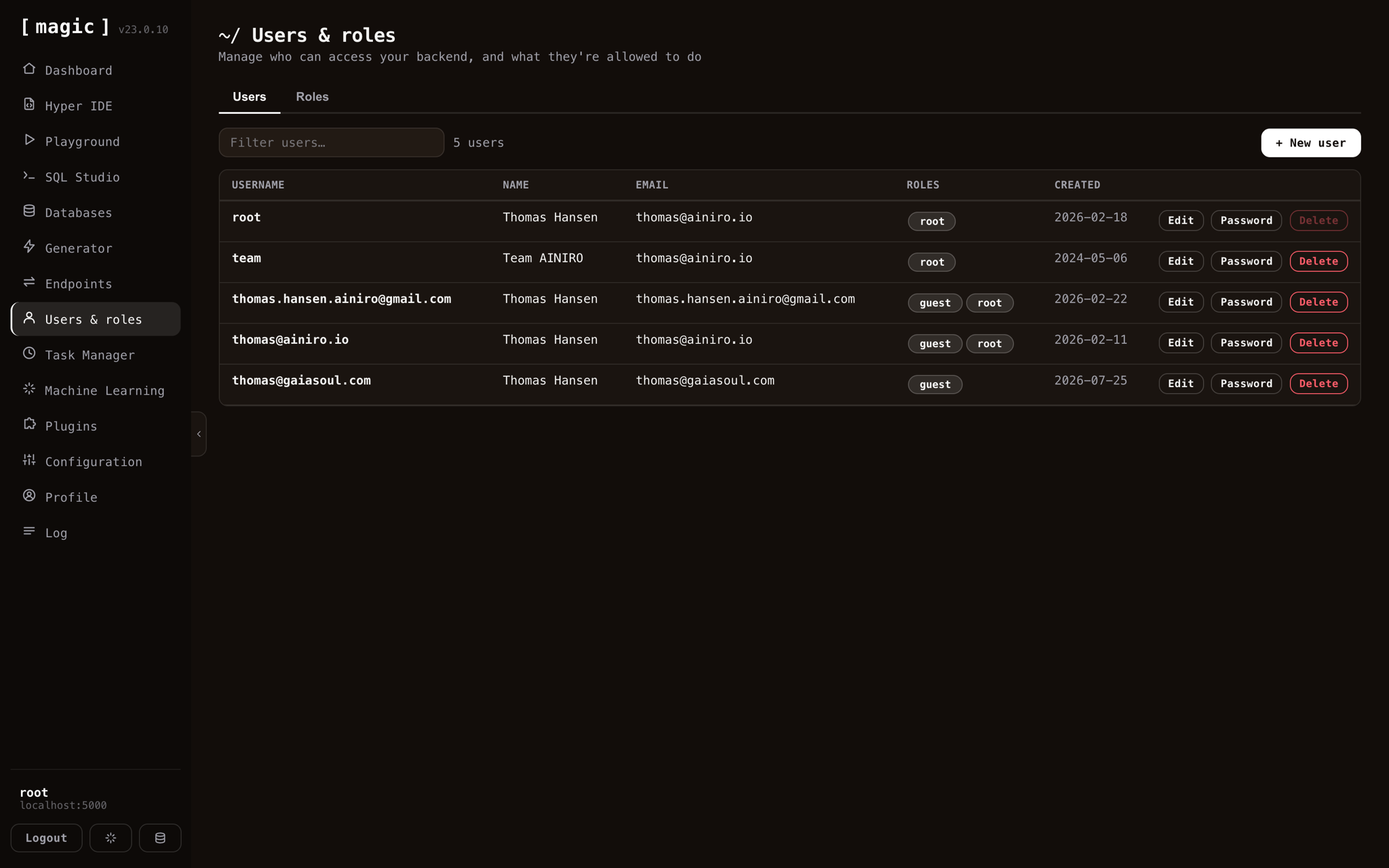
A Lovable app that needs users, roles, and data becomes a product federation: Lovable for the frontend, Supabase for the database and auth, and every seam between them yours to configure and maintain. Magic ships the whole vertical as one system — users, roles, JWT, OIDC, four database engines, generated APIs, scheduled tasks, and frontend hosting, all enforcing the same access model.

That is why an AI agent can build a complete role-secured application here in one conversation — there is exactly one system to be right about.

Users and roles in the Magic dashboard - the authorization surface for the whole platform
Why people search for this

The five reasons teams look beyond Lovable

Credit economics

The meter runs on their prices

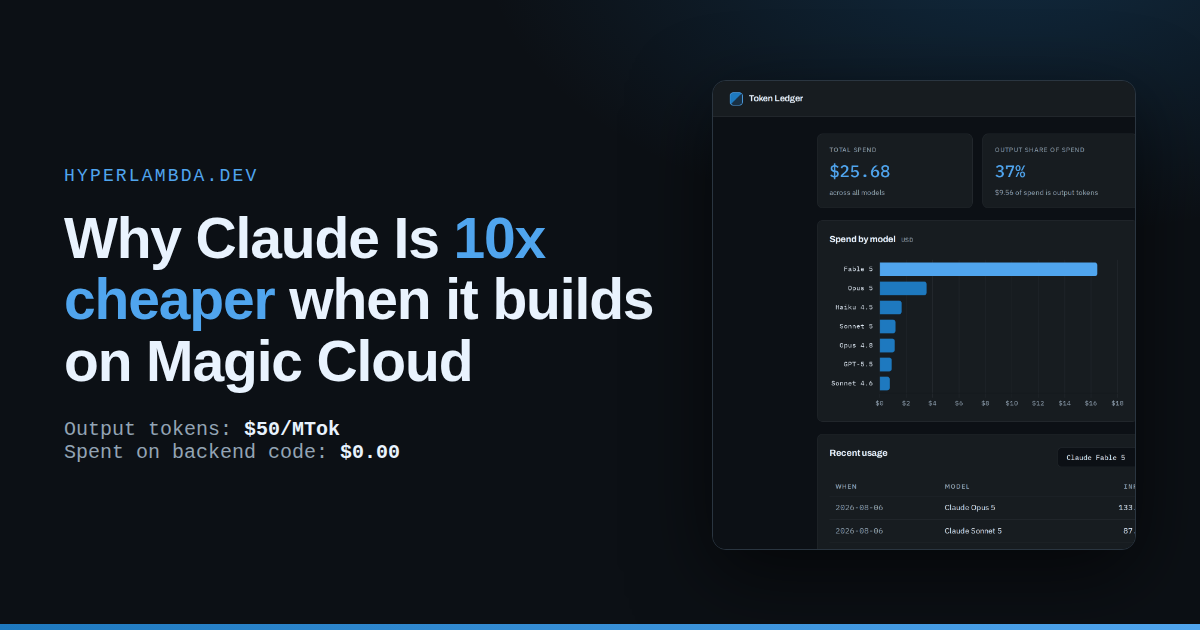
Lovable charges credits per generation — including the retries and the misfires. Building with your own agent on Magic costs plain LLM tokens at your provider's price, and the receipts are public: a complete CRM backend for around six cents.

The landlord problem

Your app lives on their platform

The product you build inside a proprietary builder stays inside it — hosting, runtime, and roadmap are all somebody else's decisions. If the pricing changes or the platform pivots, your options are their options.

The rented backend

Frontend by Lovable, everything else by Supabase

The moment your app needs persistence and auth, you are operating a second platform with its own pricing, its own security model, and its own limits — wired to the first one by generated glue you did not write.

The captive agent

One vendor's AI, at one vendor's pace

Lovable's agent is Lovable's choice of model, behind Lovable's interface. Magic works with whatever agent you already use — Claude, Codex, OpenCode — over MCP, so when a better model ships, you switch agents, not platforms.

Prototype to production

The cliff after the demo

Validating an idea is one thing; running it with real users, roles, backups, and compliance is another. Rented stacks tend to get harder exactly where owned stacks get easier — at the moment your app starts mattering.

To be fair

Lovable is genuinely good

It produces beautiful frontends from a prompt faster than anything else in its class, and for a non-technical founder validating an idea this afternoon it is a superb tool. The question this page answers is what to pick when owning the result matters.

The comparison

Magic Cloud vs Lovable, honestly

Including the rows Lovable wins — and it wins real ones. Ecosystem momentum, out-of-the-box design polish, and non-developer ease all go to them, stated plainly.

FeatureLovableMagic Cloud
CategoryAI frontend builder on a hosted platformBackend platform AI agents build on
Unit of workA React app living on their platformReal files — endpoints, modules, SPAs — on a server you control
BackendRented — Supabase integration for database and authNative — four database engines, generated REST APIs, auth, RBAC, tasks, in one system
FrontendLovable wins on polish — strikingly designed React out of the boxStatic sites and SPAs generated and served from the cloudlet — functional first, designed by your agent
The AICaptive agent, their model, their interfaceBring your own — Claude, Codex, OpenCode, anything speaking MCP
Pricing modelSubscription plus credits per generationMIT self-hosted free; agents build at plain token cost; managed cloudlets flat per user
Deploy to testPublish cycle through their platformNone — save the file, invoke it the same second
Code execution safetyGenerated code, reviewed by youWhitelisted runtime — generated code cannot exceed its permissions, $100 standing bounty
LicenseProprietary SaaSMIT, all of it
Self-hostingNoFirst-class — one copy-paste on a $6 droplet
Exit doorCode export exists; the platform — hosting, backend wiring, agent — does not come with youNothing to exit — you were holding the files the whole time
Ease for non-developersLovable wins — prompt to pretty app with zero technical vocabularyWizards for the common jobs; the rest assumes a developer or an agent
Community & momentumLovable wins — one of the fastest-growing products in the categorySmall — one team, one architecture
The row that matters most

Ownership is the feature everything else hangs on

Every proprietary builder eventually presents the same bill: the platform that made starting easy is the platform that makes leaving expensive. Your app's runtime, its backend wiring, its hosting, and the agent that maintains it all live behind someone else's subscription — and the better your app does, the more that subscription is worth to them. This is not malice; it is the business model working as designed.

Magic's answer is structural, not contractual. The runtime is MIT-licensed, so the exit door cannot be closed by anyone — including us. Take your cloudlet's files and database to any hardware and everything keeps running: apps, APIs, auth, scheduled tasks. Stay because it is worth staying, never because leaving hurts. The long version of this argument is Vibe Coding Without a Landlord.

And because generated code executes inside a whitelisted runtime rather than as arbitrary code, the agent building your app cannot build its way out of its permissions — the security model survives the author being a probabilistic machine. There is a standing $100 bounty on proving otherwise. Nobody has.

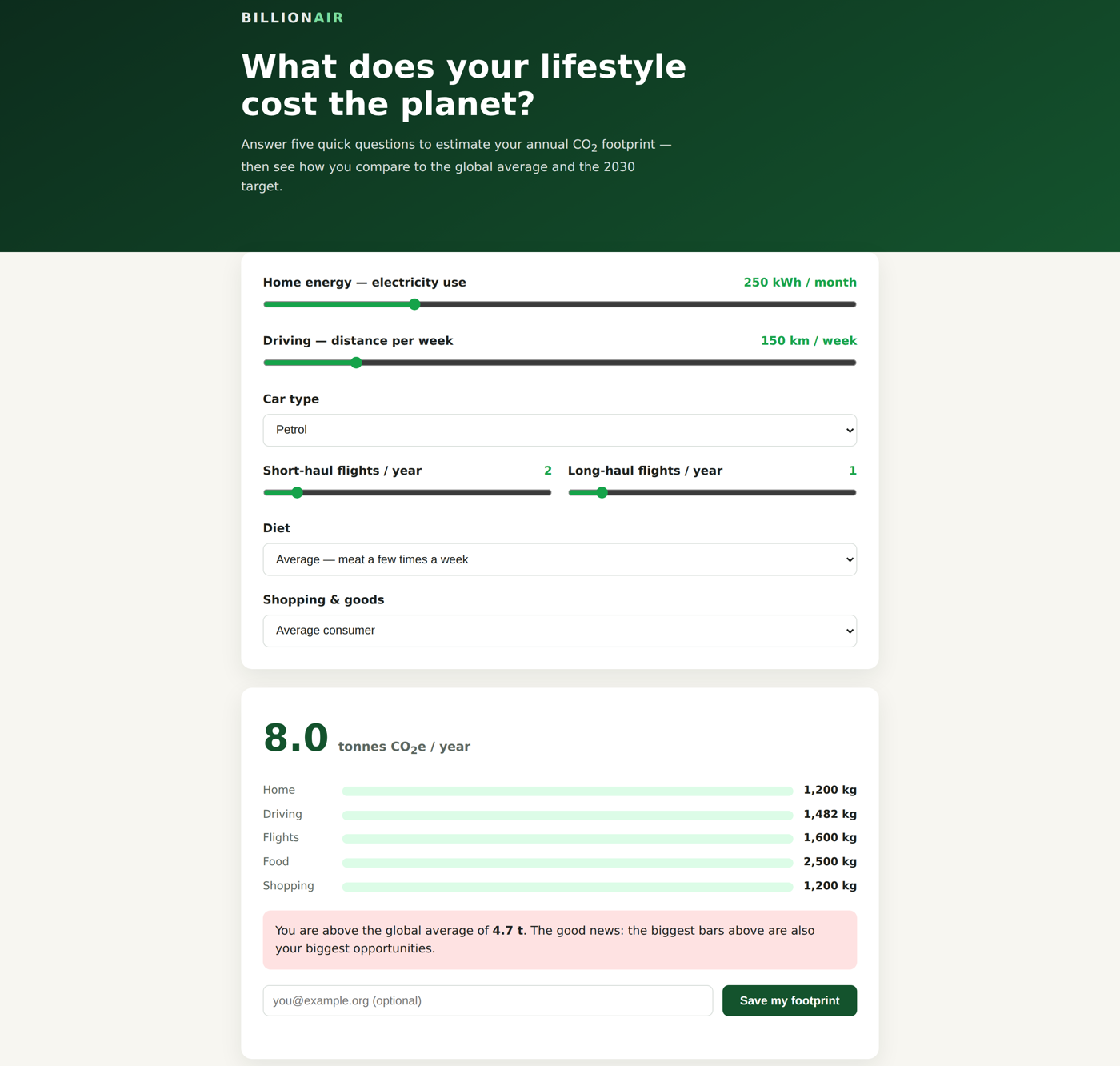
A complete carbon-footprint calculator application built on a Magic cloudlet, showing the branded form and computed results
Proof, not claims

Full stack, one system, built by an agent

This carbon calculator is a complete application on a Magic cloudlet — SQLite database, public and role-gated API endpoints, and the frontend itself, all served from one system. An AI agent built it autonomously during a live client meeting: database, endpoints, SPA — deployed and smoke-tested before the call ended.

No Supabase project, no hosting product, no credits — and nothing about it stops working if AINIRO disappears tomorrow, because it is files and a database on a server, MIT-licensed top to bottom.

The honest section

When you should stay on Lovable

You are validating an idea, this week, without a developer. Lovable's prompt-to-pretty-app loop is the best in its class, and for a landing page, a pitch demo, or a quick MVP, ownership questions are premature. Validate first.

Design polish is the product. If what you are selling is primarily a beautiful frontend and the backend is trivial, Lovable's design instincts out of the box beat what a code-first platform will give you without effort.

You want zero infrastructure decisions, ever. Self-hosting — even one copy-paste on a droplet — is still a decision. If that is one decision too many, a fully managed proprietary platform is the honest fit, and Lovable is a good one.

You don't have to choose

Keep Lovable for the frontend, own the backend

Magic exposes real REST endpoints with OpenAPI specifications, and a Lovable-generated frontend calls them like any other API. Several sensible setups use Lovable for UI iteration speed and a Magic cloudlet as the backend those frontends talk to — your data, your auth, your business logic on your hardware, their design polish on top. The products compose; this is not a zero-sum page.

Frequently asked questions
Is Magic Cloud really open source?

Yes. The entire platform is MIT-licensed — database layer, code generation, auth, RBAC, AI features, and the dashboard. You can self-host it, resell what you build on it, and take your files and database elsewhere at any time.

Do I need Supabase or any other backend service with Magic?

No. Magic is the backend — SQLite is built in, PostgreSQL, MySQL, and SQL Server connect natively, and auth, RBAC, generated REST APIs, scheduled tasks, and frontend hosting all run in the same system. There is no third-party service federation to assemble or maintain.

Can I use Claude, Codex, or my own AI agent with Magic?

Yes — that is the intended workflow. Magic exposes a native MCP server, so Claude, Codex, OpenCode, or any MCP-capable agent connects directly and builds on your cloudlet at plain token cost. You are never locked to one vendor's captive agent or its credit pricing.

Does Magic host frontends like Lovable does?

Yes. Static sites and SPAs are served straight from your cloudlet, next to the APIs they call. There is no separate hosting product and no deploy pipeline — save the file and it is live.

Is Magic as easy as Lovable for non-developers?

Honestly, no. Lovable is the smoother experience for a non-technical founder validating an idea this afternoon. Magic is built for people who want to own the result — developers, and non-developers working through an AI agent — and its wizards cover the most common jobs, like turning a database into a secured API in one click.

What does Magic cost compared to Lovable?

Self-hosting is free forever — MIT license, your hardware, commonly a $6 droplet. Building with your own agent costs plain LLM tokens; a complete CRM backend has been generated for around six cents. Managed cloudlets are priced flat per user with no usage metering.

Can I keep using Lovable for the frontend and Magic for the backend?

Yes. Magic exposes real REST endpoints with OpenAPI specifications, and a Lovable-generated frontend can call them like any other API. Several sensible setups use Lovable for UI iteration and Magic as the backend those frontends talk to.

Try the alternative

Five minutes to owning your stack

The whole platform — database, generated APIs, auth, frontend hosting, and the MCP server your agent connects to — on your own hardware, MIT-licensed. Still evaluating? The Supabase, n8n and PocketBase comparisons are written the same honest way as this page.

terminal
# When it’s up: log in at http://localhost:5555 with root/root.
$ curl -fsSL https://hyperlambda.dev/docker-compose.yaml | docker compose -f - up